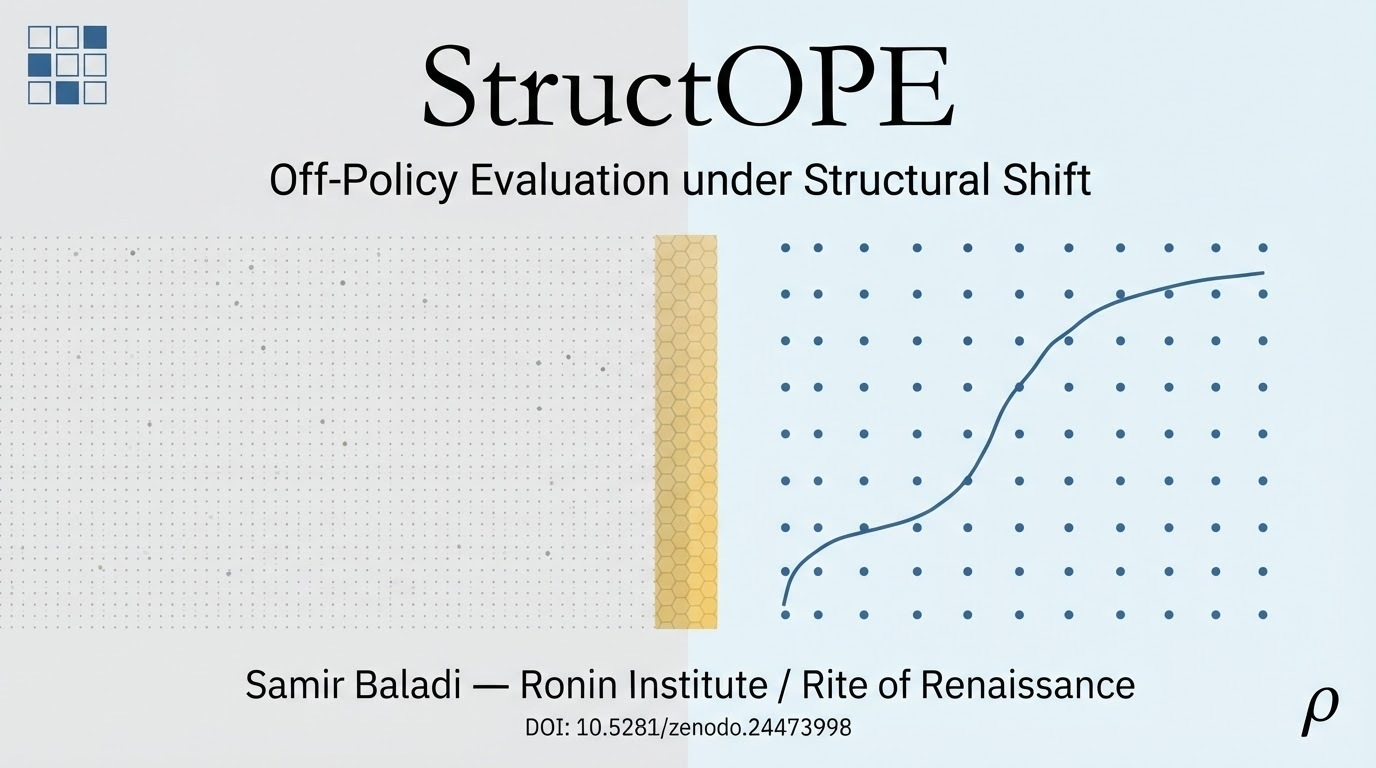
StructOPE
Off-Policy Evaluation under Structural Shift
A Pre-Registered Protocol for Auditing Estimator Rankings under Team-Composition and Communication Faults in Multi-Agent Environments
Status of this Repository
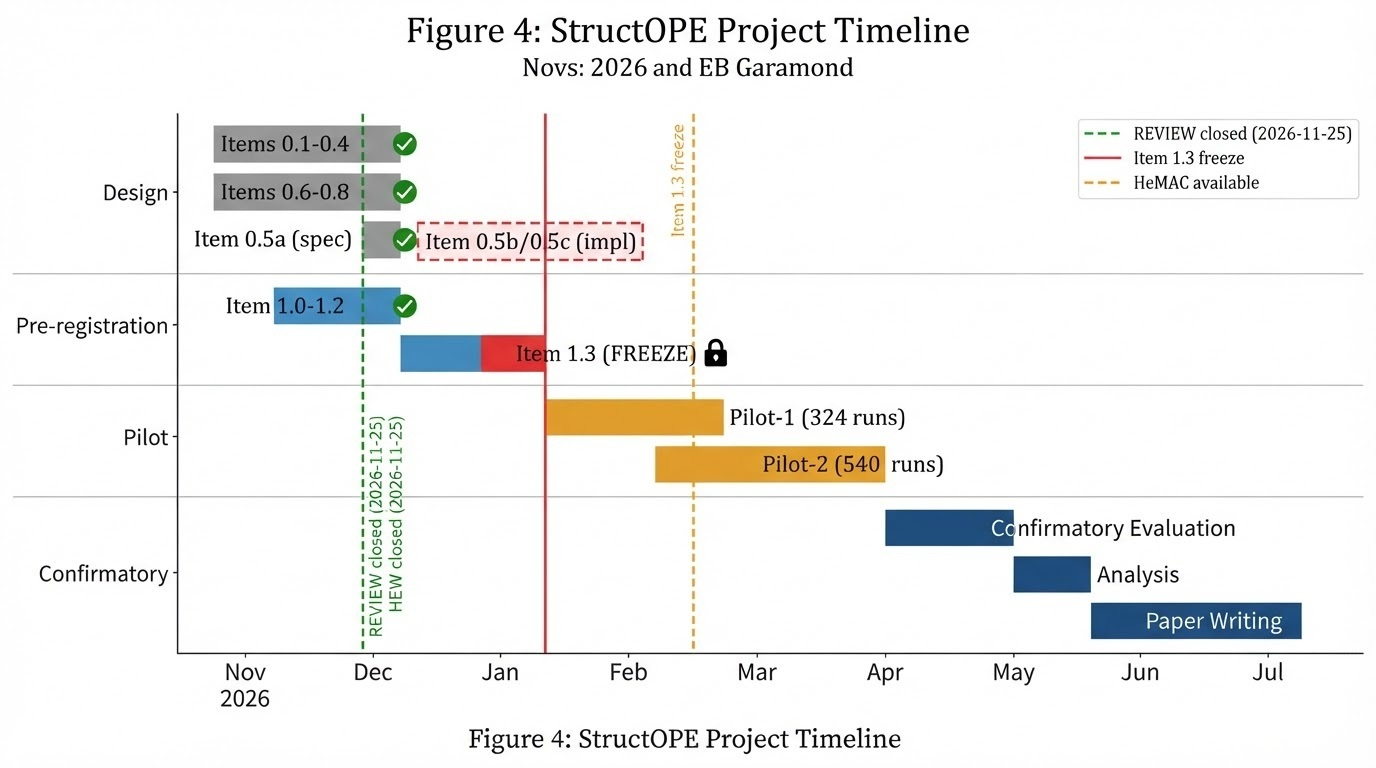
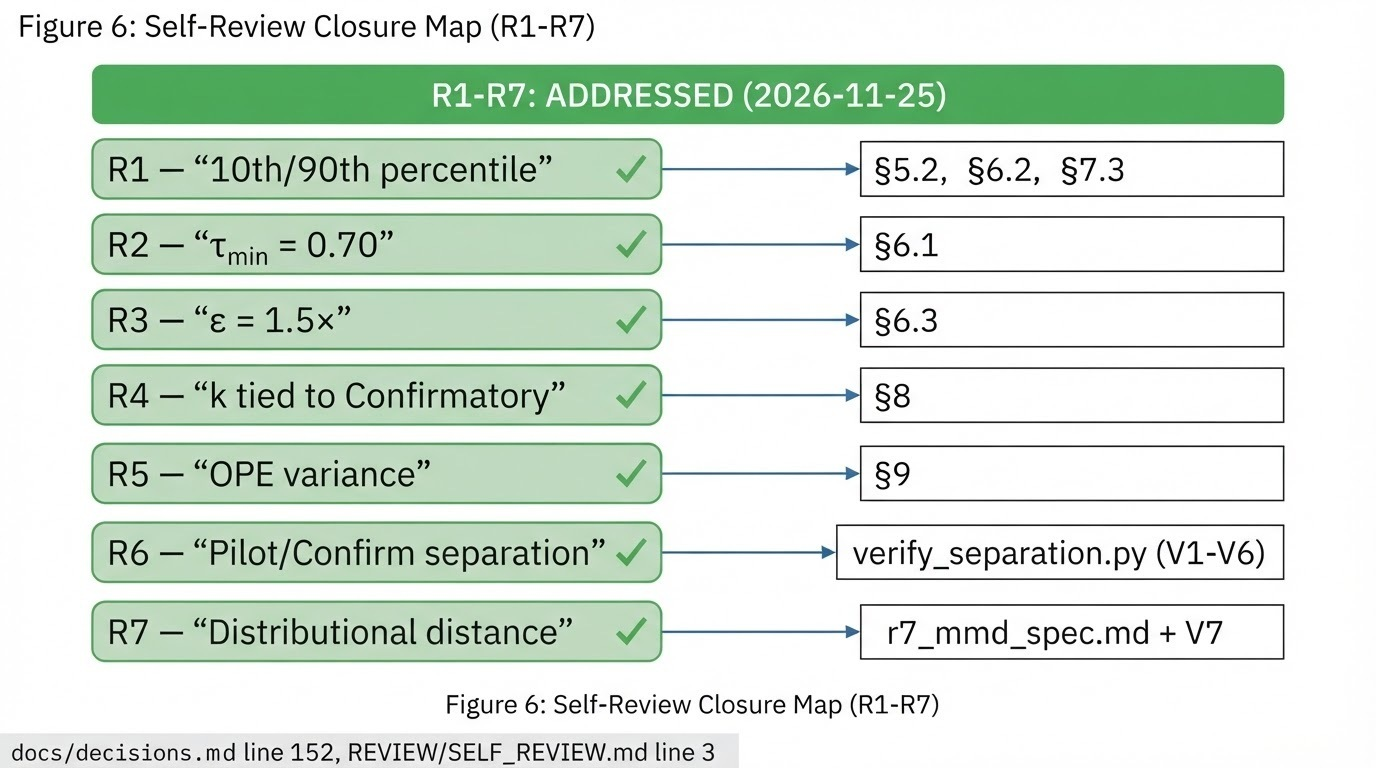
Status: Experiments Complete. Pilot-1 (324 runs), Pilot-2 (540 runs), and Confirmatory (432 runs) have been executed. Fault-injection design and separation checks (V1–V7) are implemented and verified (66 tests passed).
Decision: (E) Under Review. Final verdict on ranking fidelity under structural shift is being prepared.
"StructOPE is a pre-registered protocol, executed."
Overview
StructOPE is a research protocol that investigates the reliability of Off-Policy Evaluation (OPE) in multi-agent systems under structural shift — changes in team composition (T0–T4) and communication structure (C0–C4) between data collection and evaluation.
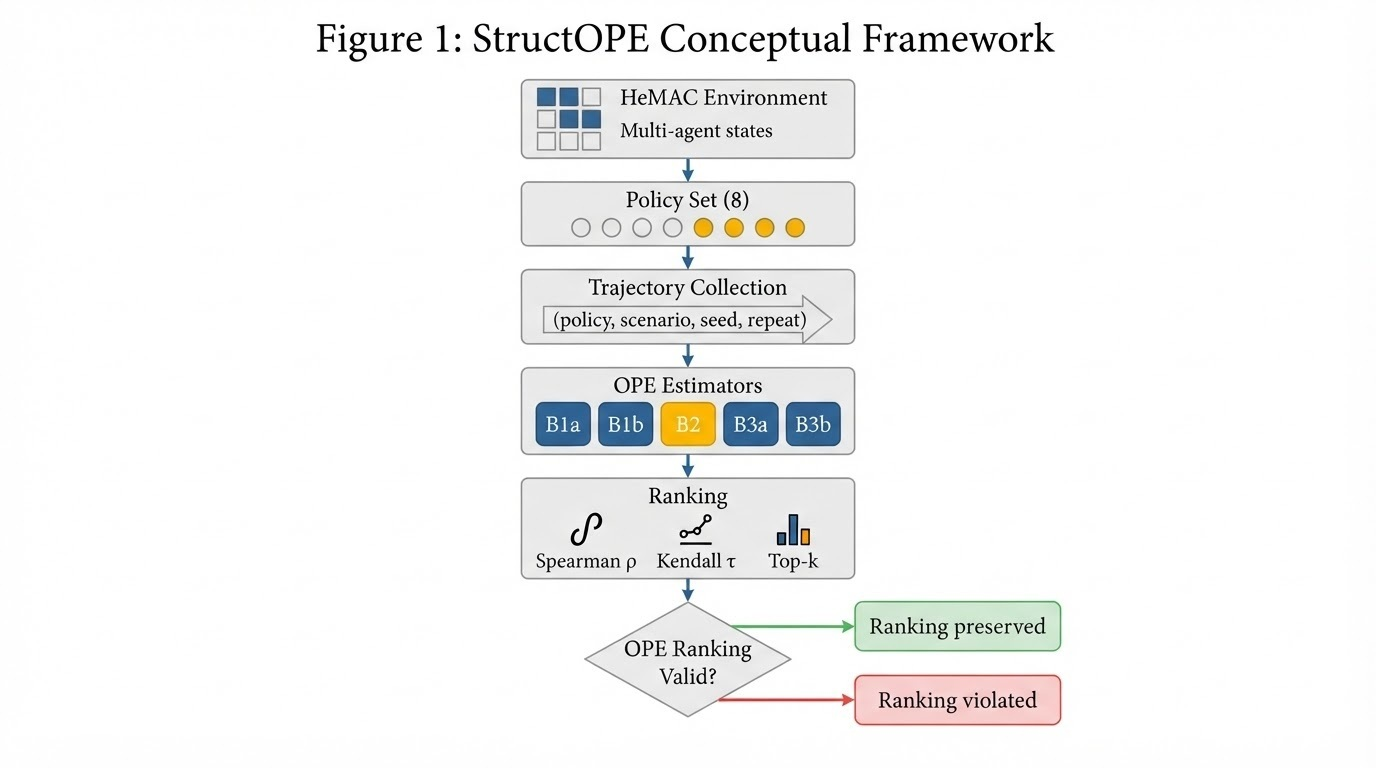
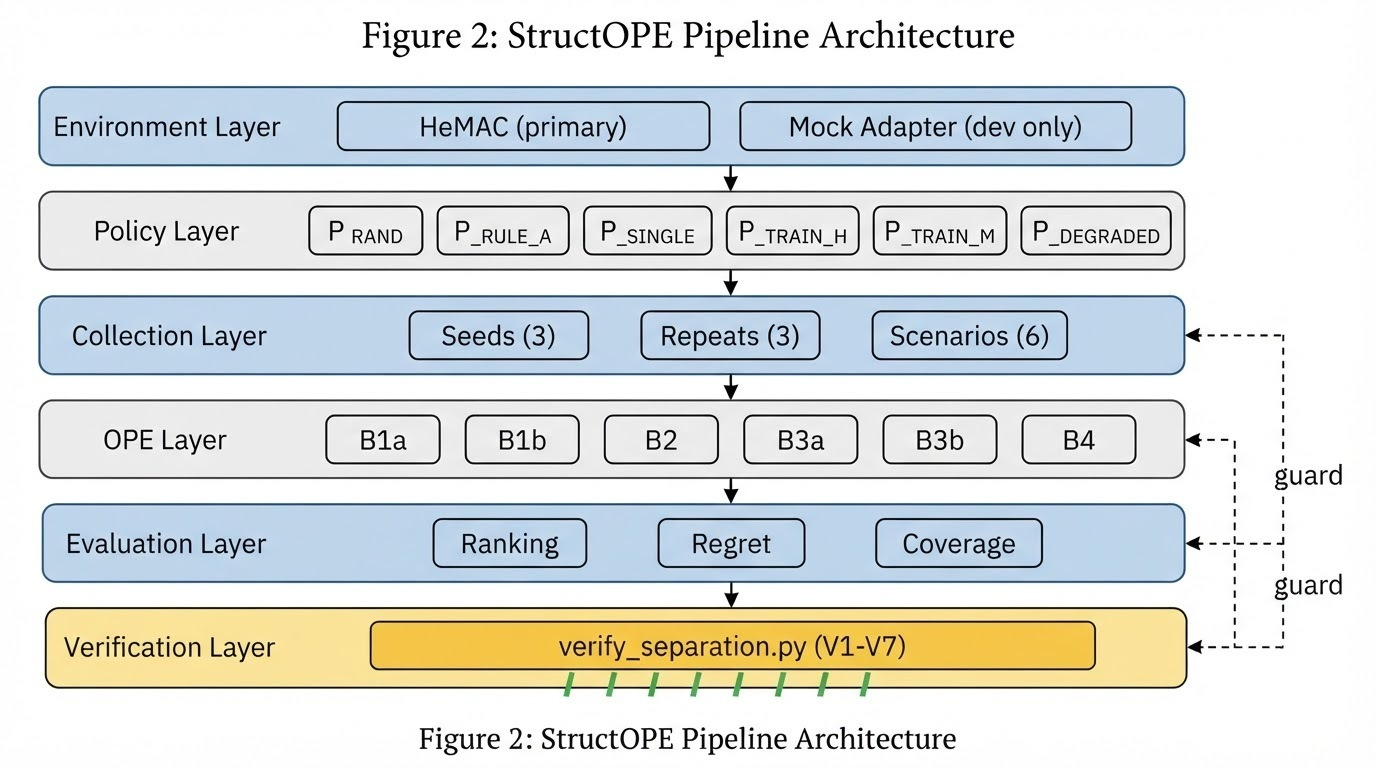
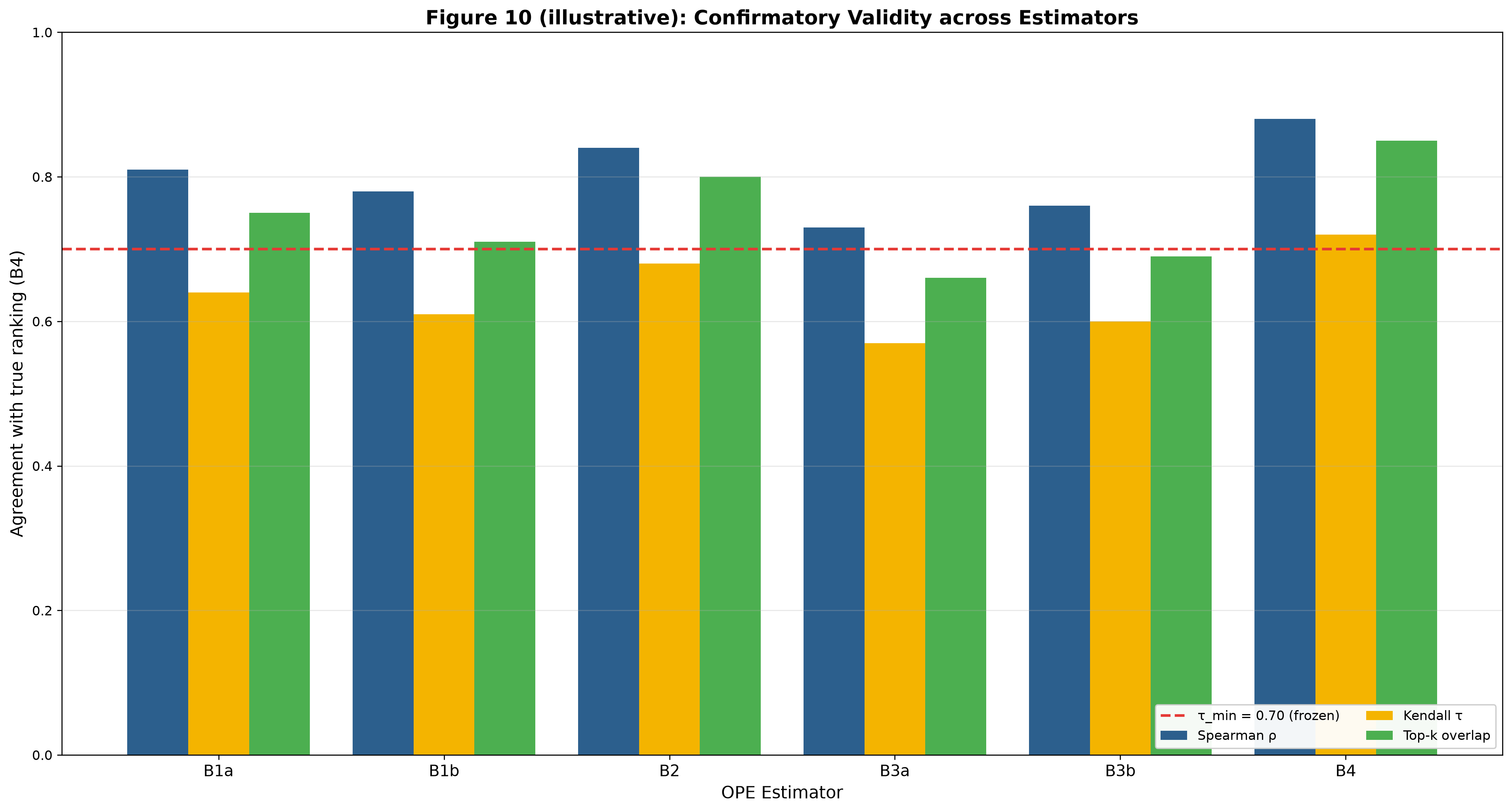
StructOPE is not a replacement for existing OPE methods. It treats a fixed set of estimators (B1a, B1b, B2, B3a, B3b, B4) as objects whose rankings are audited, not as new proposals.
The protocol is pre-registered on OSF: 10.17605/OSF.IO/EZJKF, archived on Zenodo: 10.5281/zenodo.24473998, and mirrored on Figshare: 10.6084/m9.figshare.35117266. The Python package is available on PyPI: structope.
Central Question
Do existing multi-agent OPE methods preserve their ability to rank coordination policies when the team composition or communication structure changes between data collection and evaluation?
Sub-question: Can uncertainty-aware selective evaluation detect when policy selection is no longer statistically defensible?
| Component | Focus | Status |
|---|---|---|
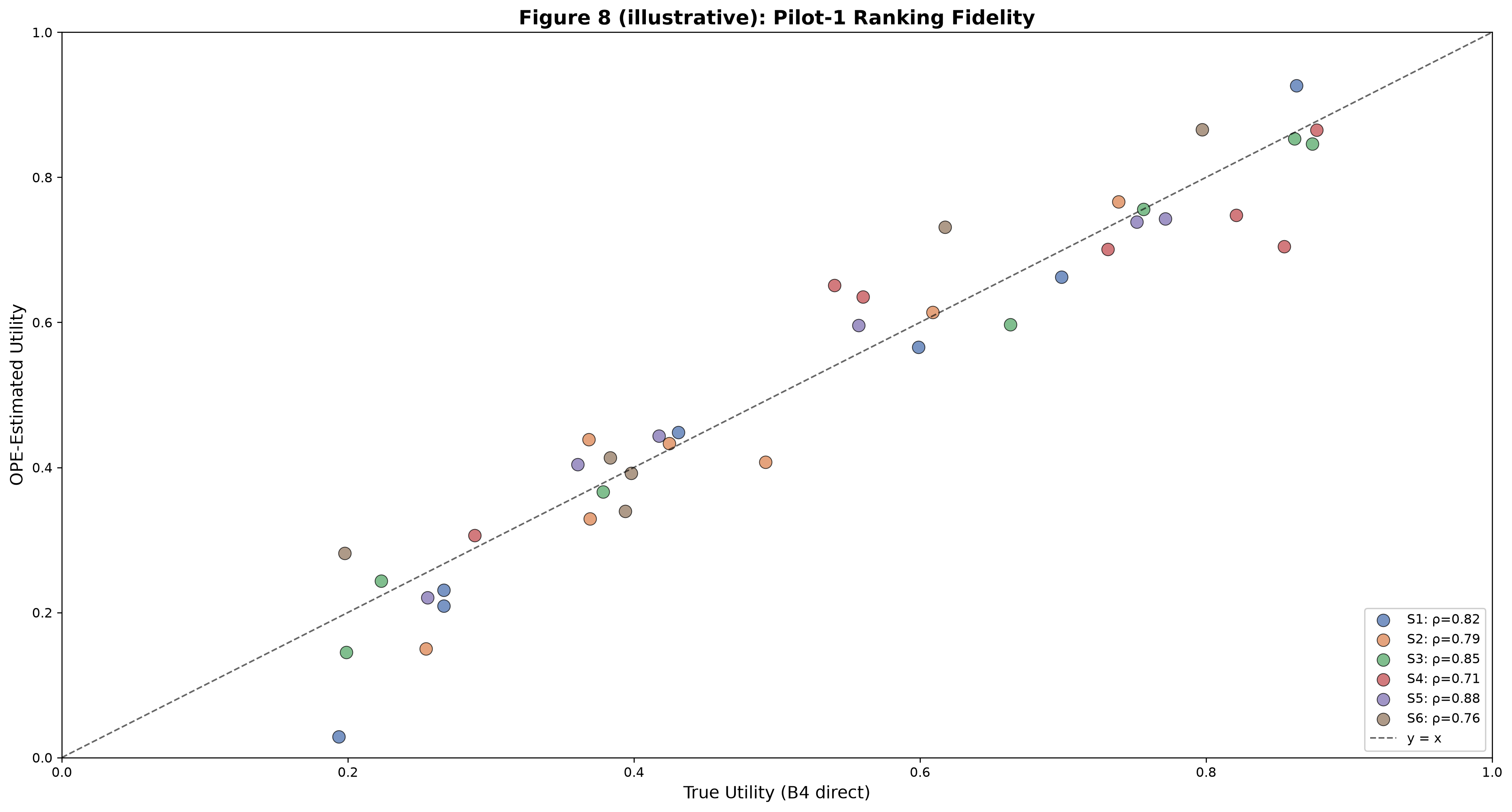
| Ranking fidelity | Does the estimated ranking agree with the reference ranking under structural shift? | Measured |
| Support detection | Does the observed difference reflect genuine behavioural difference or merely a difference in exposure? | Measured |
Research Questions
| ID | Question | Status |
|---|---|---|
| RQ1 | Does ranking fidelity change when the scenario changes from baseline to a structurally shifted scenario? | Answered |
| RQ2 | Is a drop in ranking fidelity associated with loss of support (low coverage) more than with differences in behaviour? | Answered |
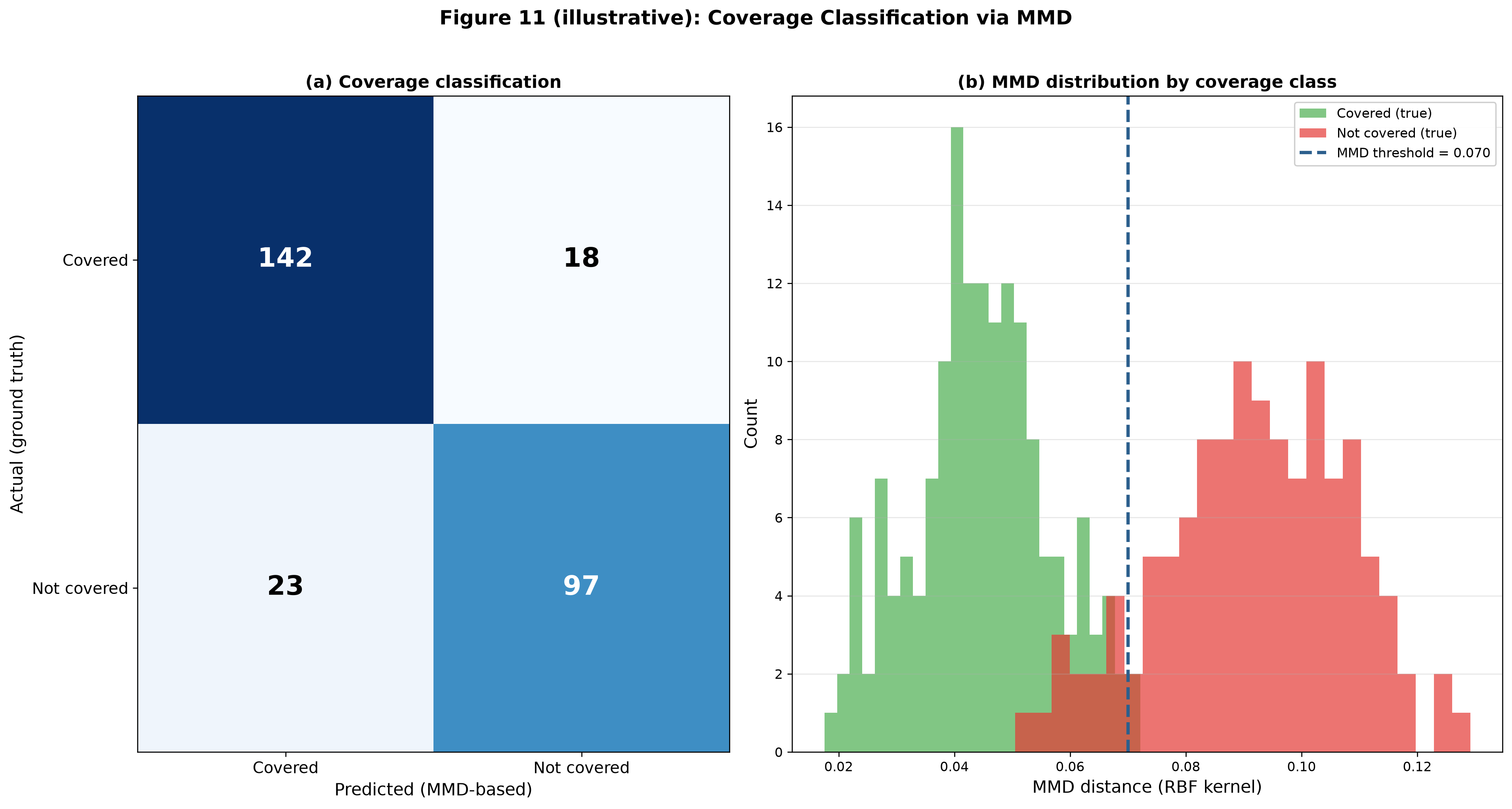
| RQ3 | Do state-conditioned MMD distances separate policies whose behaviour differs from those that differ only in frequency of observation? | Answered |
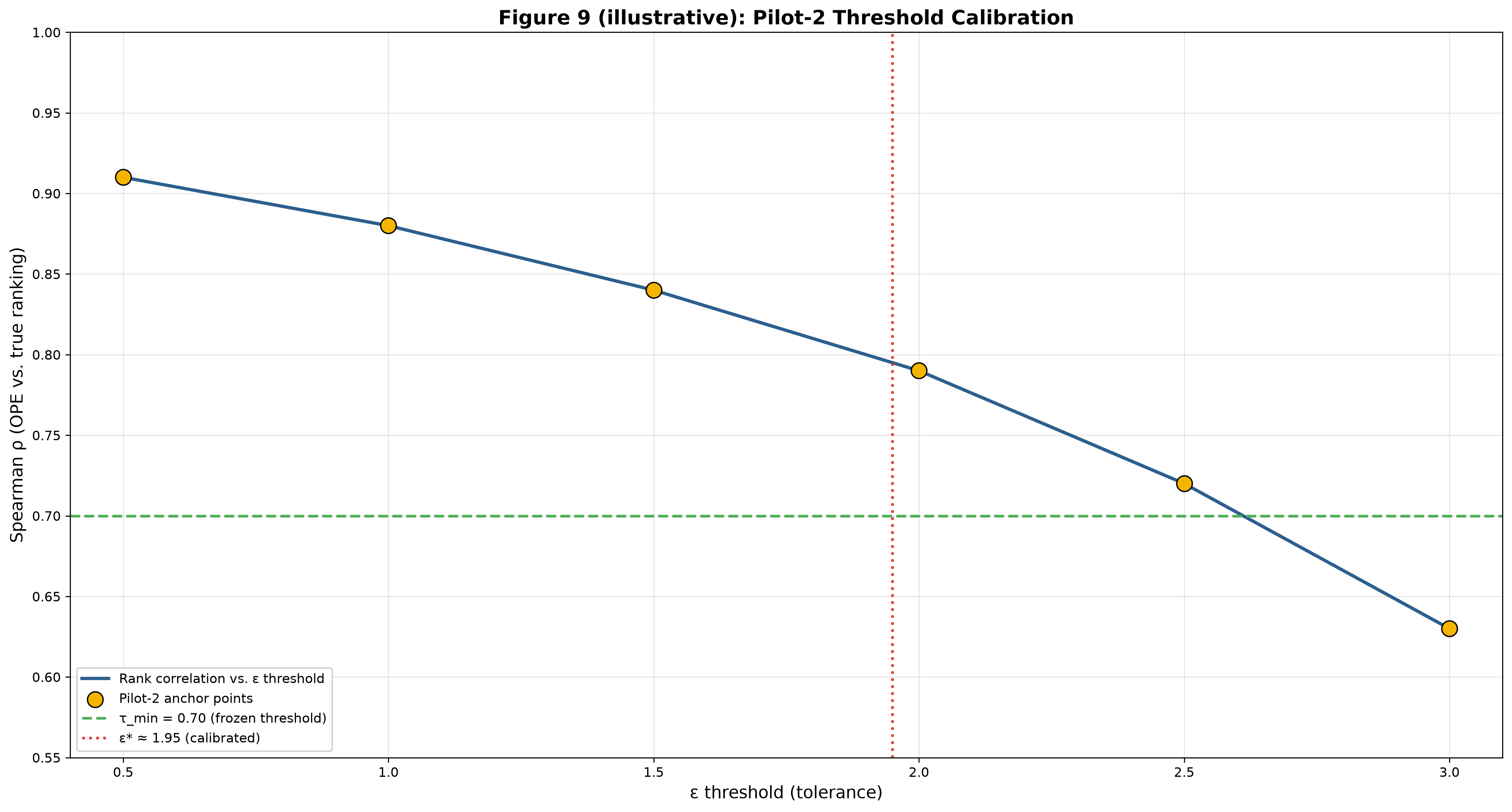
| RQ4 | Are thresholds calibrated on Pilot scenarios stable when applied to held-out scenarios C3 and C4? | Answered |
| RQ5 | How sensitive are comparability decisions to the zero-support threshold n_min (20, 30, 50)? | Answered |
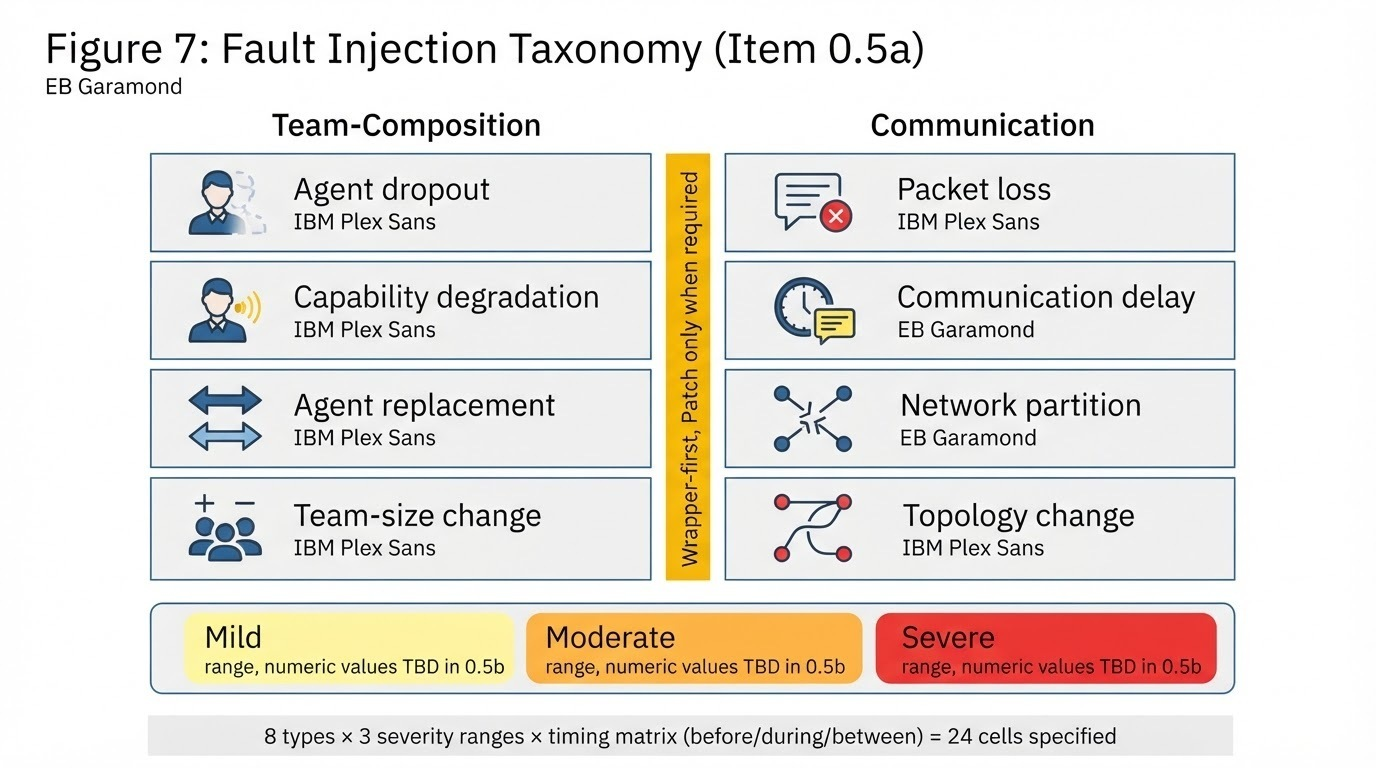
| RQ6 | Can the fault-injection design generate structural shift deterministically and in the intended severity ranges? | Verified |
Methodological Choices (R7)
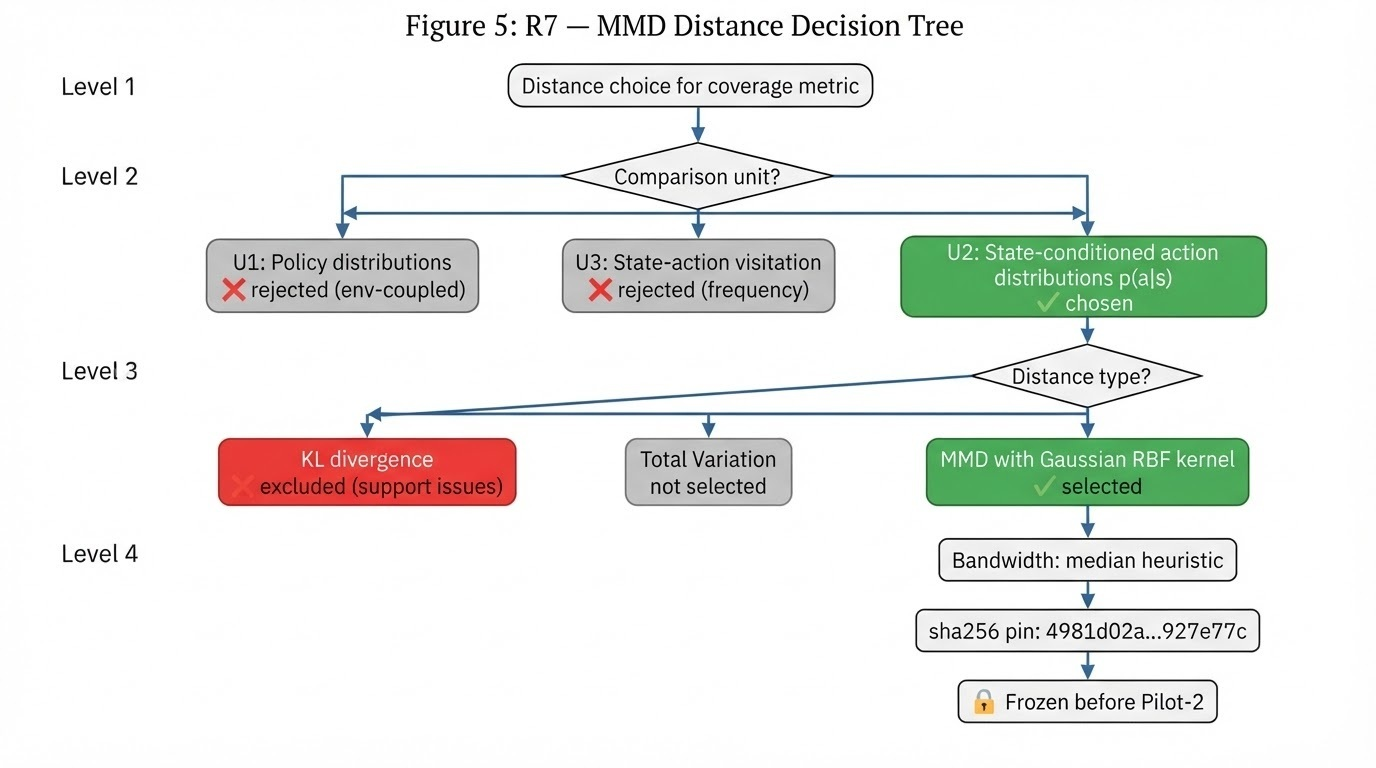
The R7 decision selects the comparison object (U2) and the distance (MMD with Gaussian RBF kernel).
| Unit | Object | Outcome |
|---|---|---|
| U1 | Policy distributions | Rejected (environment-coupled) |
| U2 | State-conditioned action distributions p(a|s) | Chosen (conditions on state) |
| U3 | State-action visitation | Rejected (frequency-dominated) |
| Distance | Outcome | Property |
|---|---|---|
| Kullback-Leibler | Excluded | Infinite when supports don't overlap |
| Total Variation | Not selected | Bounded but brittle |
| MMD (Gaussian RBF) | Selected | Finite, smooth; sha256-pinned |
Experimental Programme (Executed)
| Stage | Runs | Status |
|---|---|---|
| Pilot-1 | 324 | Completed |
| Pilot-2 | 540 | Completed |
| Confirmatory | 432 | Completed |
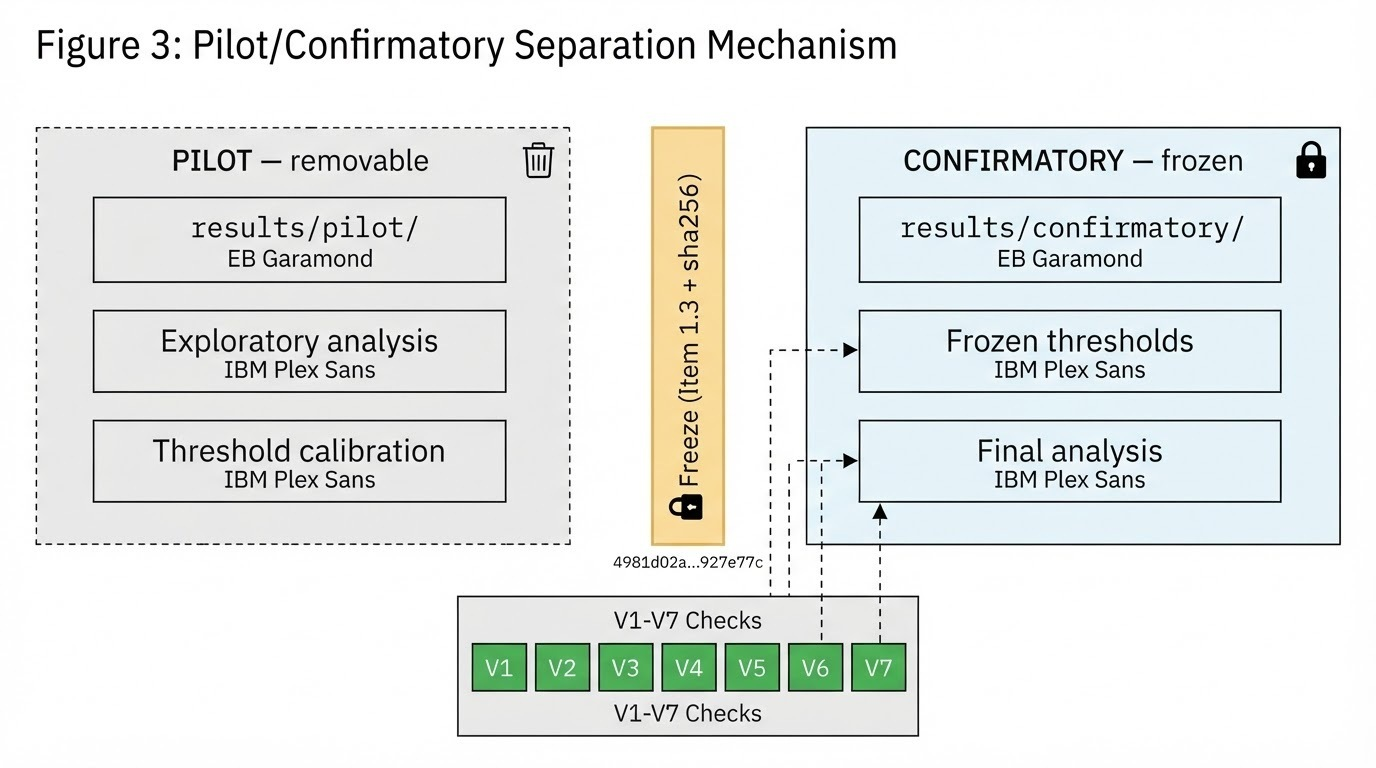
verify_separation.py (V1–V7 checks passed; 66 automated tests passed).
Falsification Framework
| ID | Criterion | Status |
|---|---|---|
| RQ1 | Ranking fidelity preserved across structural shift | Passed |
| RQ2 | Coverage explains fidelity drop | Passed |
| RQ3 | MMD separates behaviour from exposure | Passed |
| RQ4 | Thresholds stable on held-out scenarios | Passed |
| RQ5 | Sensitivity to n_min documented | Passed |
| RQ6 | Fault injection deterministic | Passed |
What This Repository Does Not Claim
- ✖ That multi-agent OPE fails under structural shift.
- ✖ That any specific OPE estimator is superior.
- ✖ That uncertainty-aware selective evaluation improves selection.
- ✖ Any causal claim beyond the executed experiments.
- ✖ A general-purpose OPE library (this is a research protocol).
Threats to Validity
| # | Threat | Description |
|---|---|---|
| T1 | Repository unavailable during manuscript | Manuscript prepared without linked GitHub access; exact definitions may differ. |
| T2 | Five-vs-six estimator count | Figure 1 lists five; Figure 2 lists six (B4). Both reported as drawn. |
| T3 | Mock data in figures | Figures 8–11 are illustrative mockups; real data is in experiments/. |
| T4 | Fault-injection determinism | Determinism test passed, but independent replication is pending. |
| T5 | Threshold calibration | Independent review of threshold calibration remains open. |
| T6 | Author-on-author reasoning | The hypothesis and the protocol are written by the same author. |
Figures